
Stormwater Drainage Installation Sydney
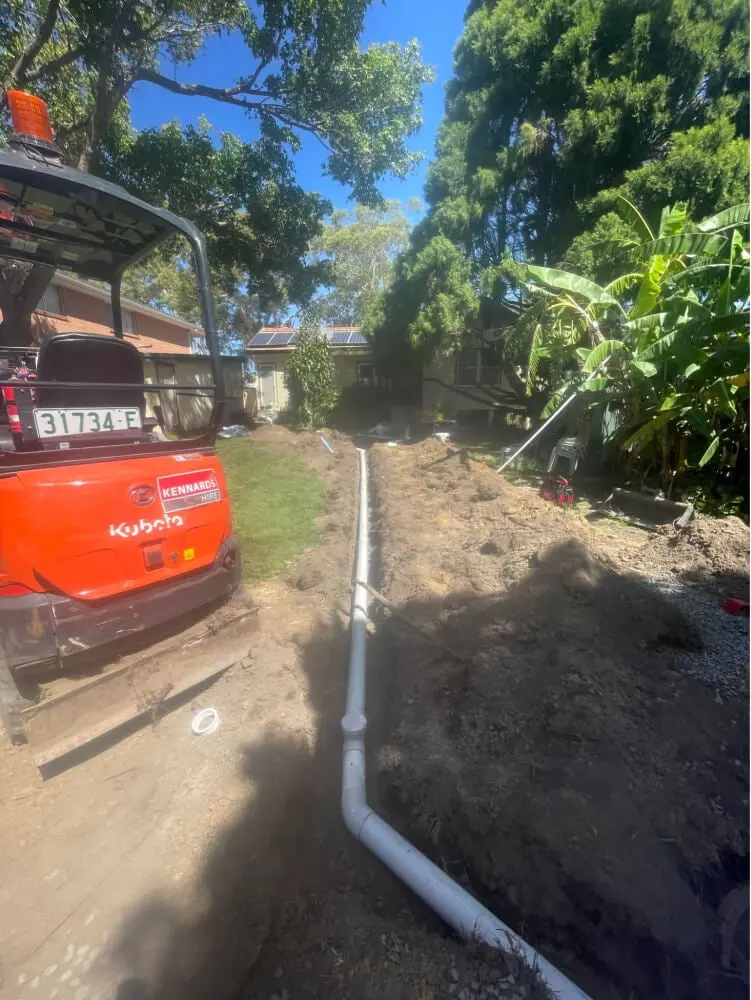
Cleared Now Drain Plumbing handles stormwater drainage installation across Sydney, laying new stormwater lines, kerb outlets, council connections and easement lines for homes and new builds.
Wednesday Drain Deal
Call Now & Get $65 Off Your First Service
Stormwater drainage is one part of drainage installation, and that page covers every drainage type we lay. Where new work replaces or joins an old line, we run our CCTV drain camera through it before any price is set. The call-out fee is $0.
-
Honest Diagnosis
-
$0 Call-Out Fee
-
Same Day Service
-
Lifetime Labour Warranty
What Is Stormwater Drainage Installation?
Stormwater drainage installation is the plumbing and drainage work that lays underground pipes carrying roof and surface water from a property to a legal point of discharge. The National Construction Code (NCC), clause 3.3.5, says a stormwater drainage system must discharge in a position and manner that satisfies the appropriate authority. NCC 2022 clause 3.3.5 also requires the design to keep any overflow in heavy rain from flowing back into the building. A legal point of discharge can sit at the allotment boundary, in on-site catchment such as stormwater tanks, or in on-site soil drainage such as soaker wells. Both new builds and existing homes need stormwater installation. The work follows AS/NZS 3500.3, the stormwater drainage standard. Penrith City Council says repairs or maintenance on a common drainage line need a licensed plumber.
Stormwater Drainage Jobs We Install
New stormwater pipes suit different jobs, covering strip drains, stormwater pits, downpipe connections, absorption trenches, charged systems and on-site detention (OSD) tanks, so pick the one that fits yours:
- Get a quote
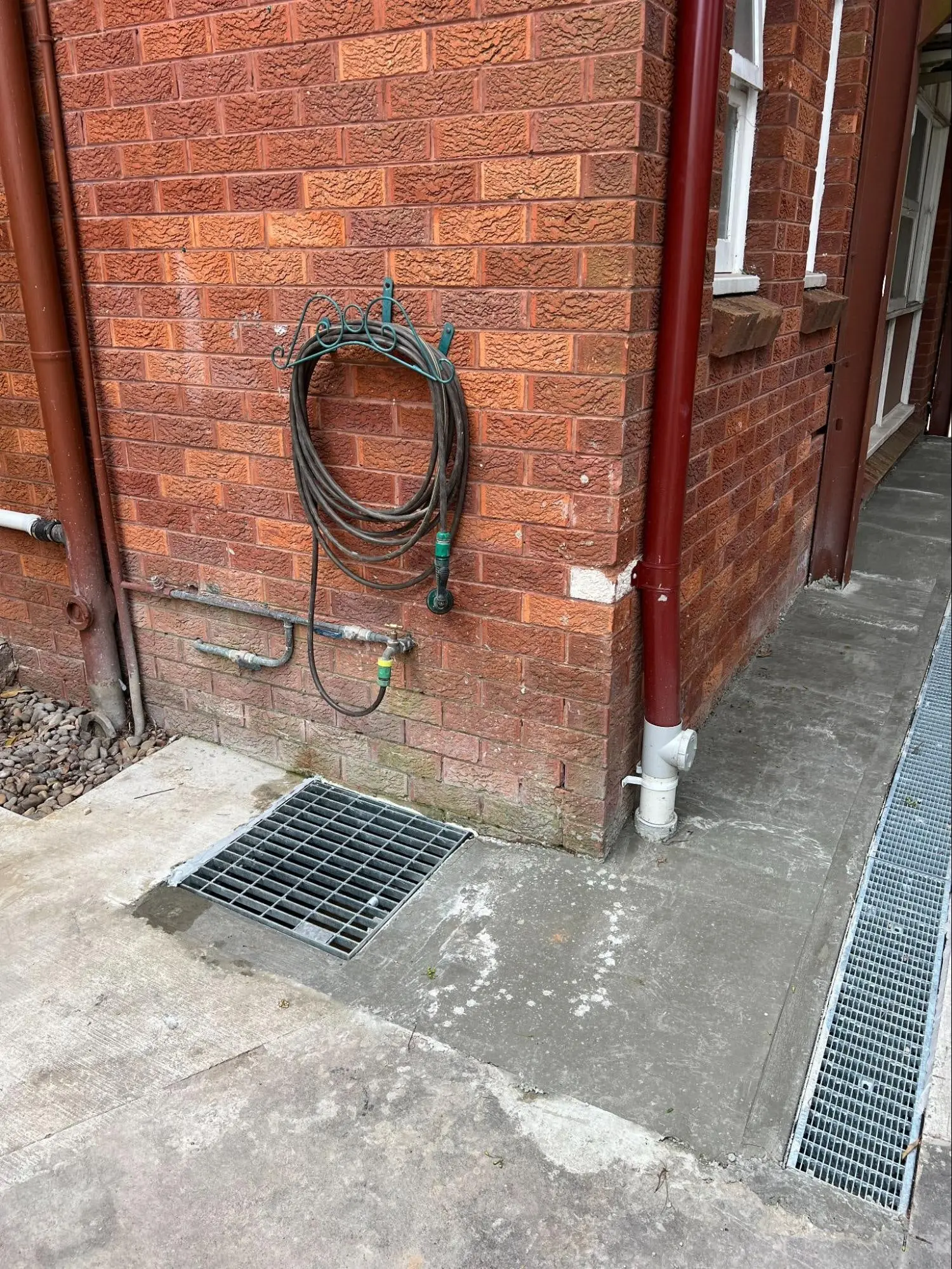
Grated strip drains collect surface water across driveways and paths and feed it into the stormwater line. Our channel drain installation page covers the grated options.
- Get a quote
A stormwater pit catches the run-off at the low point and passes it down the line. Our stormwater pit installation page covers how each pit is built.
-
Downpipe Connections
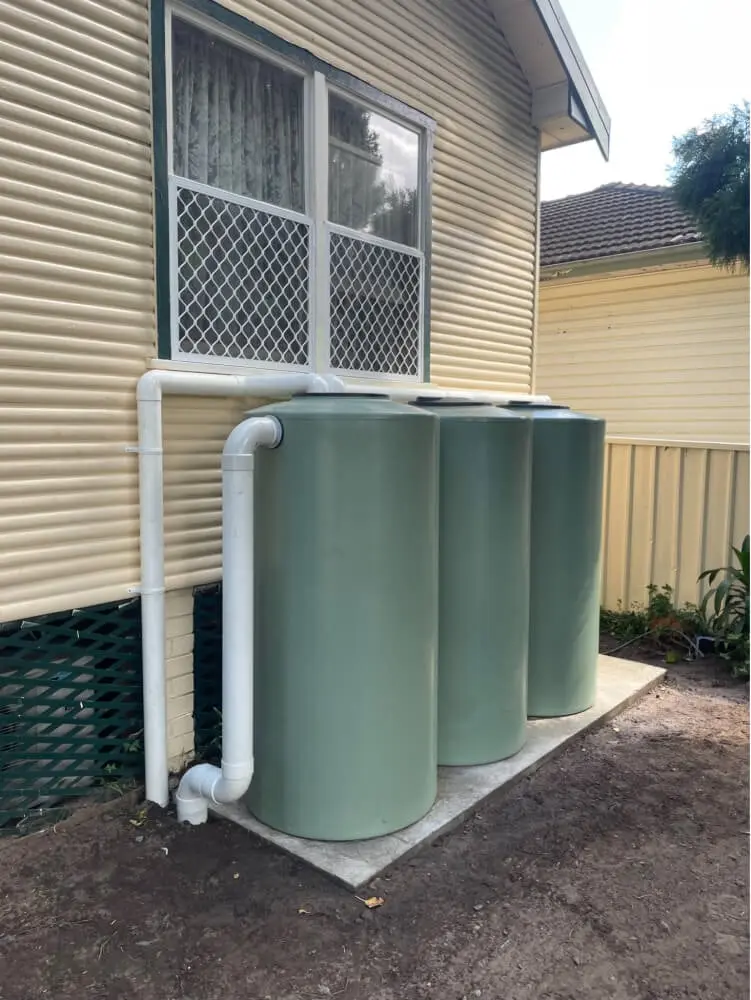
Get a quoteEvery downpipe needs its own connection to the stormwater line. Underground drainage from roof areas follows the stormwater drainage clause, where required or permitted. Our downpipe installation page shows how each connection is run.
-
Absorption Trenches
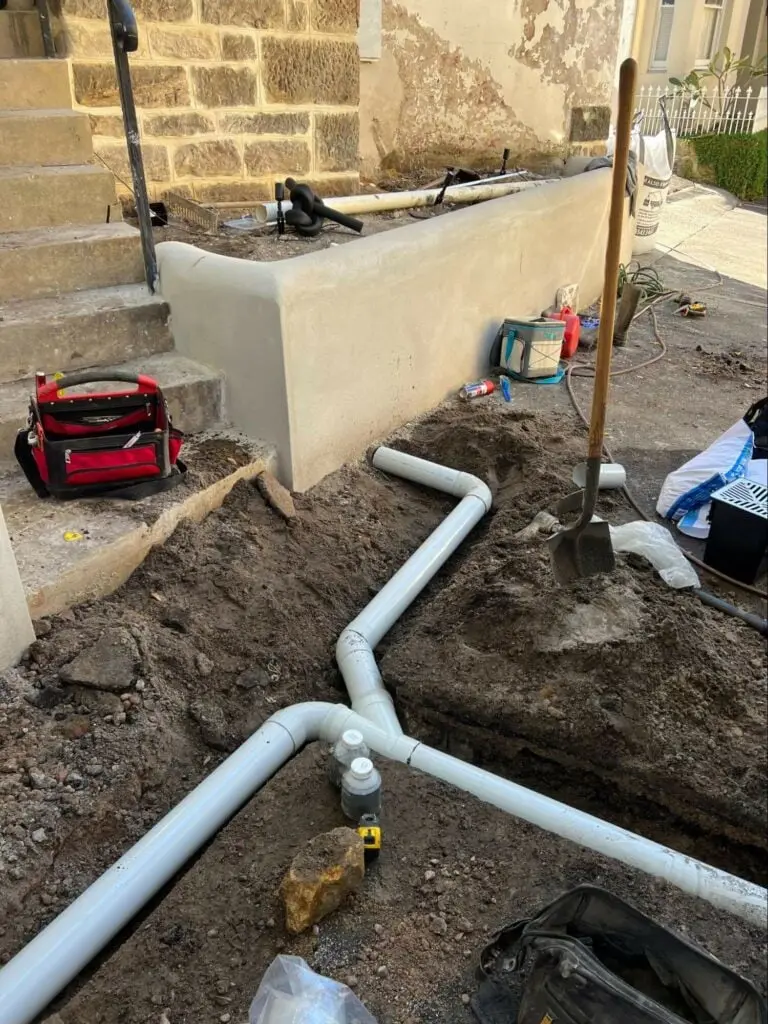
Get a quoteWhere no connection is possible, an absorption trench soaks the water into the soil instead. Mosman Council expects to approve on-site absorption for driveways, single garages or carports only. A French drain collects soil water, where an absorption trench soaks stormwater away. Our French drain installation page compares the two.
-
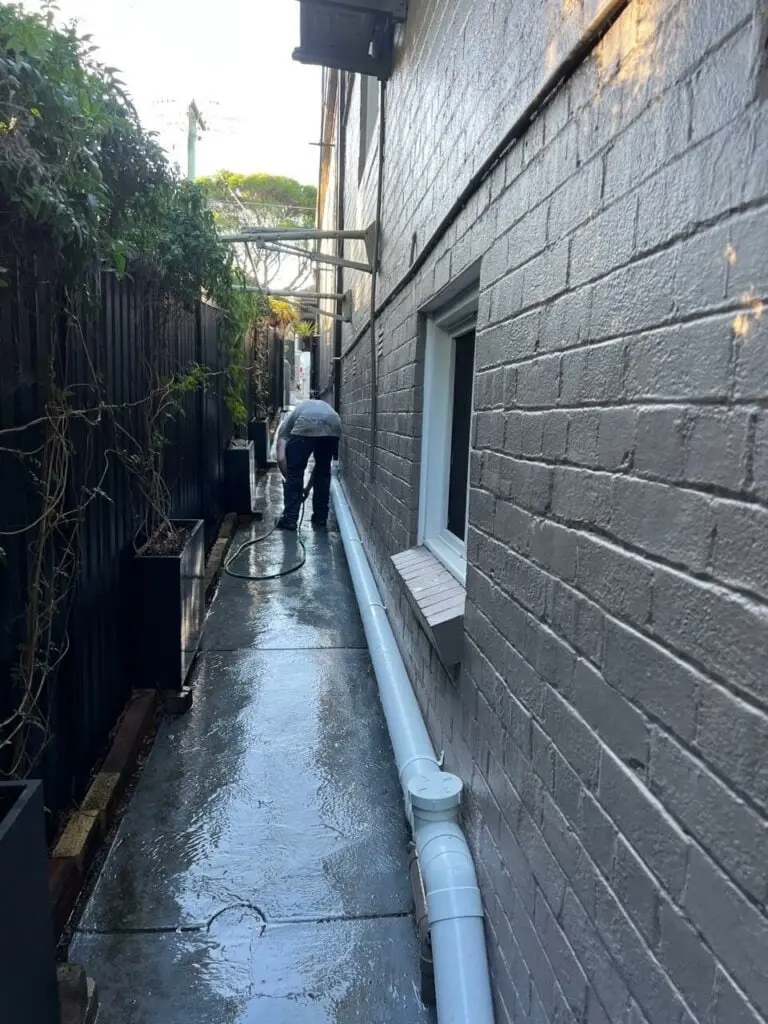
Charged Stormwater Systems
Get a quoteA charged stormwater system is a sealed charged pipe that lifts roof water over a high point to the street by siphon.
-
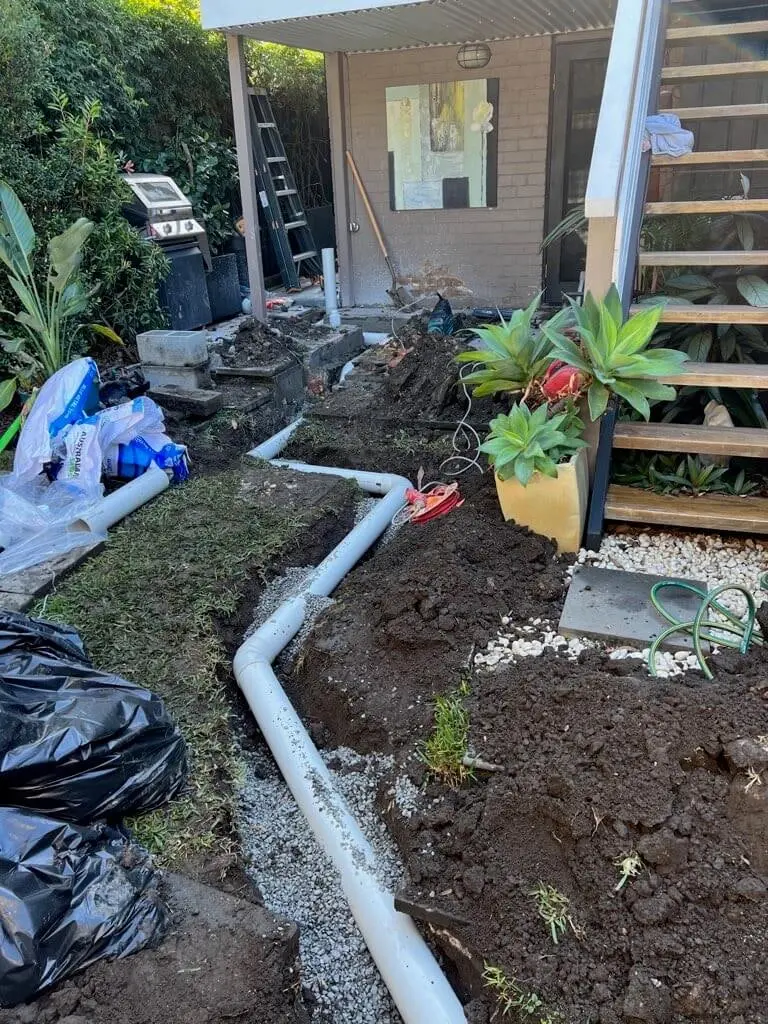
OSD Tanks
Get a quoteOn-site detention (OSD) is temporary storage that limits how fast stormwater leaves a site. An OSD tank holds the run-off back and releases it slowly.
Inspections Before Backfill
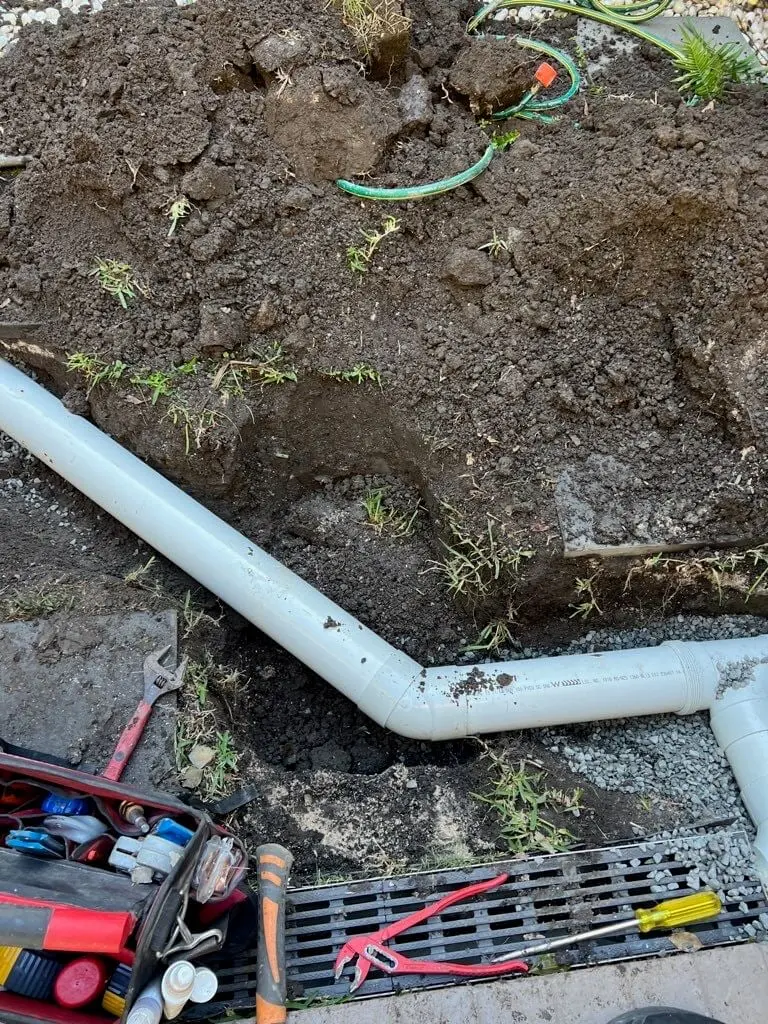
A new stormwater line isn't complete until the council has seen the connection. A Mosman Council officer inspects the junction before it is finished. The City of Sydney may ask for works-as-executed plans, certifications, warranties or CCTV footage when public domain drainage work is finished. While a building is under construction, the builder answers for the stormwater work the consent permits, and the Principal Certifying Authority enforces it. A Principal Certifying Authority is the certifier with enforcement powers during construction.
Where Your Stormwater Can Legally Go
The legal point of discharge is the approved place a property's stormwater drainage runs to. The street isn't the only option. Wollondilly Shire Council lists the kerb and gutter, inter-allotment drainage or water tanks among the approved options. Mosman Council says owners pipe stormwater from private property into Council's drainage system, which may be the kerb and gutter, a pit, a pipe or an open channel. Under NCC 2022 clause 3.3.5, the position and manner of discharge must satisfy the appropriate authority. The City of Sydney's Public Domain team decides which connection options are feasible there. Property drains often run to council street gutters first. Sydney Water's channels, pipes and creeks then carry the flow on beyond the gutters. Poorly planned internal drainage can cause flooding and seepage on downstream properties, Mosman Council warns.
-
Kerb and Gutter Outlets
Mosman Council calls the kerb and gutter connection the usual way into Council's drainage system. The stormwater connection to kerb follows Mosman's minimum: sewer grade UPVC (PVC stormwater pipe) at a 1% fall and 100 mm diameter. A kerb adaptor is a stormwater outlet fitted into the street kerb, made to the kerb profile. One maker's galvanised outlets fit standard and low laybacks, barrier kerbs and roll-top kerbs. Pipes of 150 mm and 225 mm meet the kerb through one convertor per property. Connecting to the kerb needs a road opening permit from Mosman Council. The City of Sydney may consider kerb connections site by site, gravity only, with no dry-weather flow. The worry for many owners is cost, because the council can ask for street-side kerb work before the drain can connect.
-
Easements Through Downhill Properties
A drainage easement is a legal encumbrance on a title for drainage works. Where the land falls away from the street and nothing else suits, Mosman Council grants no approval until easements are created on the downstream properties' titles. Inter-allotment drainage is a drainage line shared by the lots it serves. An inter-allotment connection needs documented evidence of a legal right to drain before approval. Penrith City Council says all owners benefiting from a common drainage line maintain it. Private easements are the burdened and benefited owners' responsibility, Wollondilly Shire Council says. Penrith City Council's responsibility starts where the line meets its street drainage. A licensed plumber may repair a shared line. A block that slopes to the back collects stormwater at the lowest corner, a long way from the street. Owners are often told a pump is the only way out. Mosman Council won't approve pump systems for surface stormwater. A kerb and gutter outlet suits a property that falls to the street, and an easement through downstream properties suits one that falls away.
-
Council Pits and Pipes
Mosman Council requires an application to connect before any new line joins a council pipe, a council pit, an open channel or a creek. The junction is finished only after a council officer has inspected it. Mosman Council requires a junction pit where the connection is over a third of the pipe's diameter. The City of Sydney requires a Stormwater Deed for any connection to its drainage infrastructure. A positive covenant is an obligation registered on the property's title. The deed goes on title through a positive covenant. Water servicing coordinators refer building plans to Sydney Water when the property holds a Sydney Water easement. Council gutters may join the channels, pipes and creeks that make up Sydney Water's stormwater systems.
Pipe Size, Depth and Fall
One look at the plan tells you the size, depth and fall of every pipe before anyone digs. 90 mm and 100 mm UPVC are the stormwater pipe sizes we lay. The NCC 2022 Housing Provisions set minimum cover over 90 mm Class 6 UPVC stormwater drains: 100 mm under soil and 50 mm under paved or concrete areas. Under light vehicle traffic, the minimum rises to 75 mm under reinforced concrete or 100 mm under paving. Cover is measured from the pipe's top to finished ground level. The plan shows the location, size, grade and class of every pipe up front. One maker's adaptor range comes in 90 mm, 100 mm and 150 mm sizes.
Our Process
A new stormwater line goes in across six steps, and the camera check keeps you from paying for drainage that misses the real fault:
-
Plan and approvals
We plan the route. The drainage plan is lodged with the development application where the development may affect drainage, showing the disposal method and any easements. -
Camera check
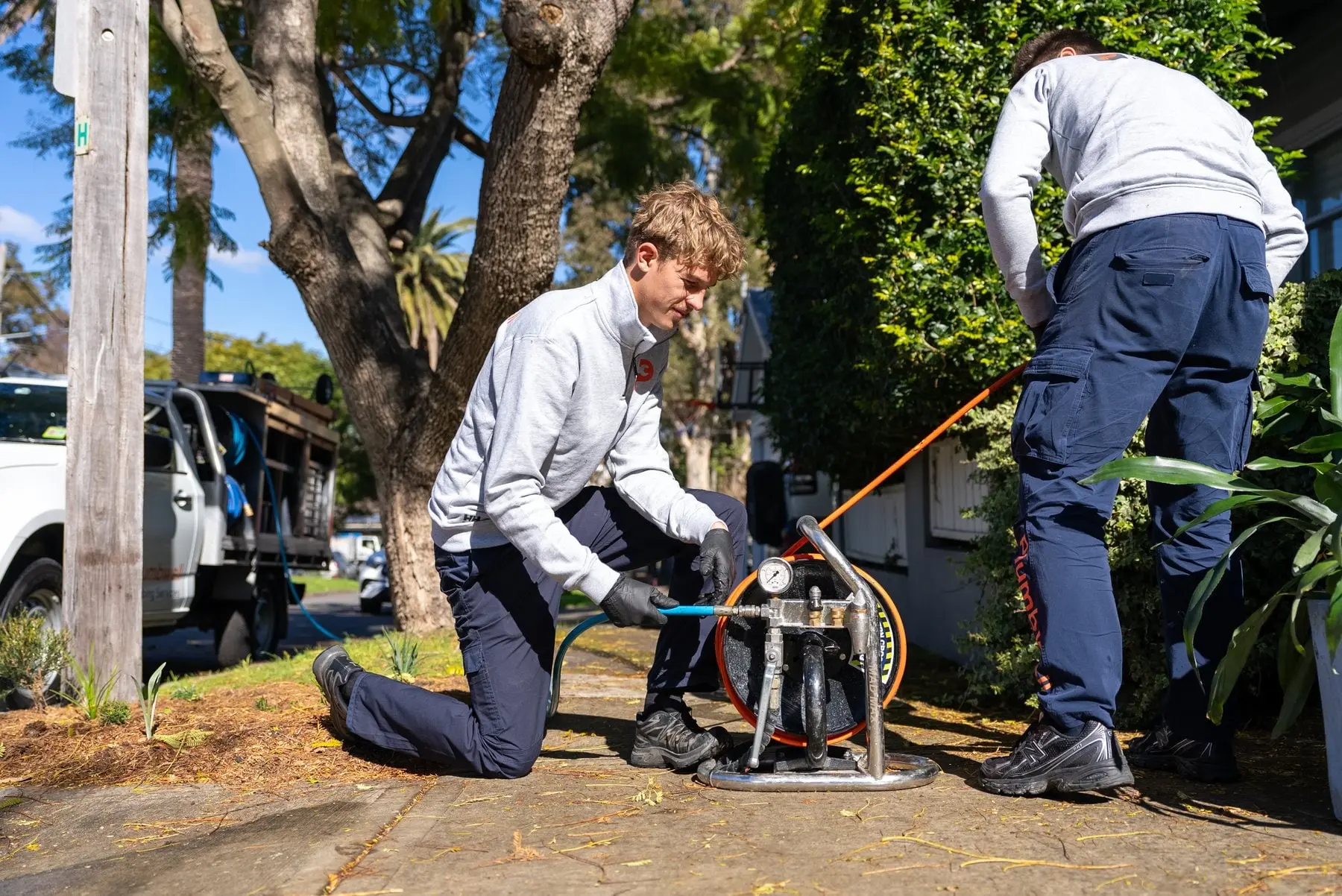
Our CCTV drain camera inspects any existing line the new work joins, before the quote. -
Written quote
On every job, the price comes to you in writing before any work starts. -
Trench and lay
We trench and lay the pipe, keeping drains beside existing footings inside the NCC's safe excavation zone. -
Connect and inspect
The new line joins the legal point of discharge, and the council officer inspects and approves the junction before it's finished. -
Backfill and handover
We backfill the trench, and the labour sits under the Lifetime Labour Warranty.
Where slotted ag pipe from a subsoil system feeds the line, our subsoil drainage page covers how it joins the stormwater line at a pit.
Why Choose Cleared Now Drain Plumbing
Cleared Now Drain Plumbing brings a local, owner-led team, 15+ years' experience and 300+ five-star reviews to every stormwater drainage job, from a kerb outlet to an easement line. Four things stand behind the work:
-
Honest Diagnosis First
Our CCTV drain camera shows you what it finds in any existing stormwater line, and we recommend the fix before any work begins.
-
Quote in Writing First
The call-out fee is $0. You see your price in writing before the work begins, on every job. Best Price Guaranteed applies on a written quote.
-
Lifetime Labour Warranty
The Lifetime Labour Warranty covers the labour.
-
Licensed and Insured
Cleared Now Drain Plumbing holds contractor licence 498750C, issued by NSW Fair Trading for plumbing, draining and gasfitting. The whole team is fully licensed and insured.
Areas We Service
Cleared Now Drain Plumbing brings Same Day Service to the Northern Beaches, North Shore, Hills District, Inner West, Eastern Suburbs, Western Sydney, Sutherland Shire and South West Sydney.

Book Stormwater Drainage Installation in Sydney
Stormwater pooling at the low corner of your block, or a new build that needs its stormwater lines in? Call (02) 9158 3577: a real person answers 24 hours and arranges Same Day Service, with a $0 call-out fee. Before your written quote, we run our drain camera through any existing line the new work joins. You get $65 off your first service as a new customer. Every job comes with Quality Workmanship Guaranteed.
Frequently Asked Questions
How Deep Should Stormwater Pipes Be Buried?
The NCC 2022 Housing Provisions require at least 100 mm of cover under soil and 50 mm under paved or concrete areas. Under light vehicle traffic, the minimum is 75 mm under reinforced concrete or 100 mm under paving. Cover is measured from the pipe's top to the finished ground level.
How Much Does Stormwater Installation Cost in Sydney?
What's The Damage, October 2026, puts the Sydney day rate for bigger jobs such as new drainage at $800 to $1,200 for an eight-hour day. What's The Damage's October 2026 Sydney guide notes sandstone can add $500 to $2,000 to the excavation bill on older inner suburbs. Under-slab work on slab-on-ground homes costs more. The written quote follows the site look.
Can You Build Over a Stormwater Easement?
No, a drainage easement is a legal encumbrance on the title, and generally no structures or improvements sit inside its boundaries. Wollondilly Shire Council names dwellings, landscaping, earthworks, retaining walls and fill among the improvements that generally can't sit there.
How Do I Find a Drainage Easement in Sydney?
The Section 88B instrument shows where the common drainage line runs. The instrument is the title document that records a shared line. NSW Land Registry Services can help retrieve a copy, Penrith City Council notes.
Can Stormwater Go Into the Wastewater System in Sydney?
No, property owners mustn't allow rainwater or stormwater to enter the wastewater system, Sydney Water says. In very heavy rain, extra water enters the wastewater system through stormwater pipes connected directly to it. Heavy rain is a common cause of wastewater overflows, Sydney Water says. Stormwater isn't treated before it flows into creeks and rivers.
How Do I Book Stormwater Drainage Installation in Sydney?
Book your new stormwater line with one call to (02) 9158 3577. A real person answers 24 hours and books Same Day Service, with the $0 call-out fee.